
AI Digital Marketing
15 Best AI Tools for Digital Marketing in 2026
Discover 15 of the best AI tools for digital marketing in 2026 for SEO, content, social media, ads, research and marketing automation.
Read article
Learn what a marketing funnel is, how each stage works, examples of TOFU, MOFU and BOFU, and how businesses turn prospects into customers.
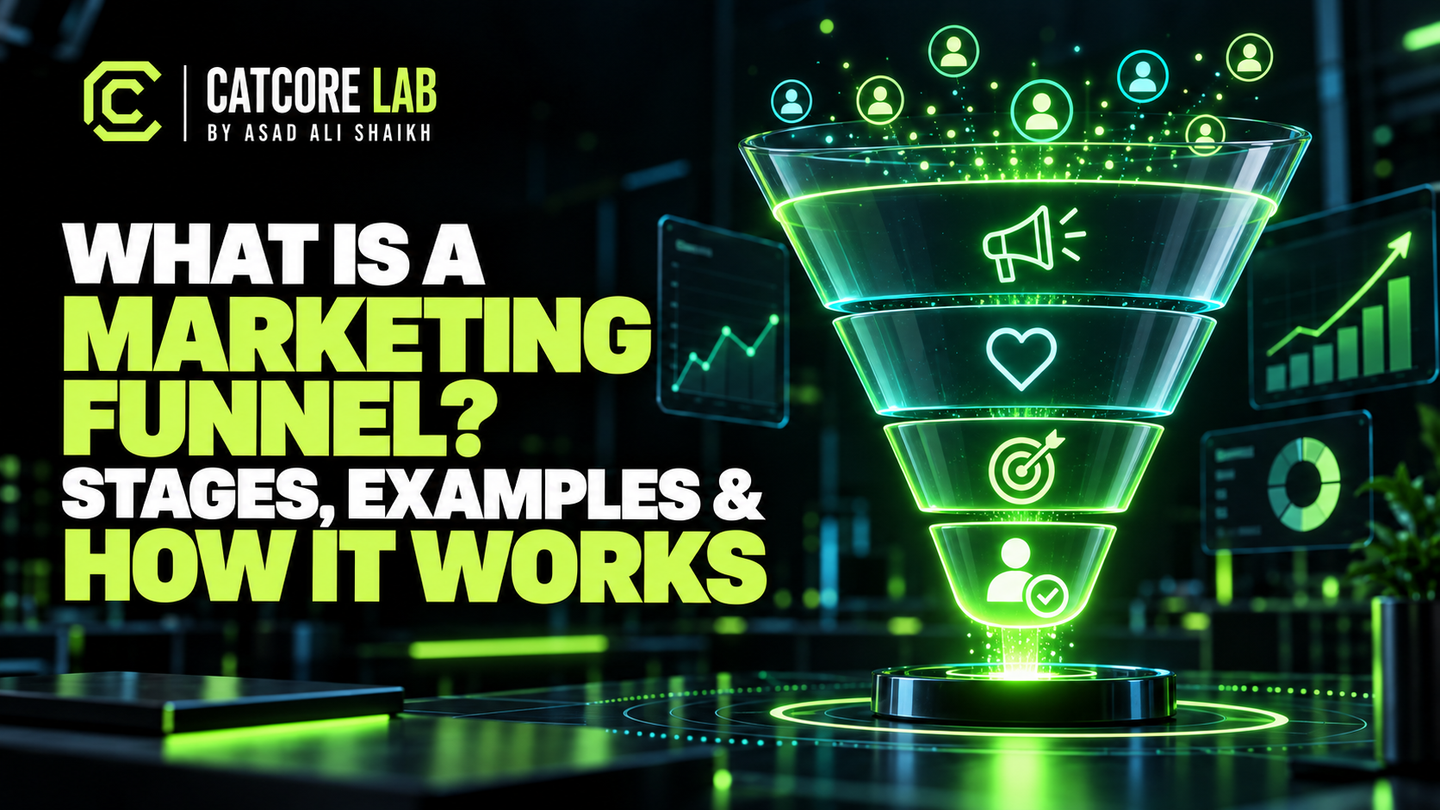
A marketing funnel is a framework that shows how someone moves from first discovering a brand to becoming a customer. It helps businesses understand what people need at different stages of the buying journey and which type of content, advertising or communication can move them closer to a decision.
At the top of the funnel, you may have thousands of people who simply know your brand exists. As the funnel becomes narrower, fewer people continue—but those who remain usually have stronger buying intent.
A simple marketing funnel often looks like this:
Awareness → Interest → Consideration → Conversion → Loyalty
The funnel is not meant to suggest that every customer follows exactly the same path. Real customer journeys are often messy. People may discover a business on Instagram, leave, search the brand on Google a week later, compare prices, watch a review and only then decide to buy.
The funnel simply gives marketers a practical way to understand that journey.
This is why understanding funnels is an important part of modern digital marketing. Students learning through an AI Digital Marketing Course in Pakistan should understand not only how to run ads or create content, but how those activities connect to an actual customer decision.
A marketing funnel works by matching marketing activity with the customer's level of awareness and intent.
Imagine you run an online clothing brand.
Someone who has never heard of you probably will not immediately respond to an ad saying:
“Buy now.”
They may first need to discover the brand through a Reel, blog article, Google search or recommendation.
Later, they might visit your website, check your products, compare prices and read customer reviews.
Only after that may they become ready to purchase.
That journey can be divided into different funnel stages so marketers know what type of message makes sense at each point.
HubSpot describes the marketing funnel as a way of mapping the journey from initial awareness through purchase and loyalty. Read HubSpot's marketing funnel guide
The awareness stage is the top of the funnel.
At this point, people may not know your business at all. They may only know that they have a problem, interest or need.
For example, someone might search:
“How can I learn digital marketing?”
They are not necessarily ready to enroll in a course. They are just looking for information.
Useful awareness-stage marketing can include:
For Catcore Lab, an article such as How to Become an AI Digital Marketer in Pakistan is a good example of awareness-stage content.
The reader may be researching a career and not yet looking specifically for a course.
At this stage, the goal is usually not to force a sale.
The goal is to become useful enough that the person remembers or continues exploring your brand.
Once someone becomes aware of your brand and finds something useful, they may start showing interest.
They might:
This is where good internal linking becomes extremely useful.
For example, someone reading about marketing careers may next want to know which tools marketers use. A natural next step could be Catcore Lab's guide to the best AI tools for digital marketing.
You are not asking the person to jump from “I am curious” straight to “give us your money.”
You are helping them build confidence and understanding.
The consideration stage is where buying intent becomes much stronger.
The potential customer now understands the problem and starts comparing possible solutions.
Someone considering a digital marketing course might ask:
This is why detailed product pages, course pages, case studies, testimonials and comparisons become important.
A learner considering Catcore Lab can review the course curriculum and practical learning areas to understand how AI, advertising, funnels, analytics, content and websites fit together.
In a traditional TOFU, MOFU and BOFU model, this stage is often referred to as MOFU — middle of the funnel.
This is where proof matters more than reach.
The conversion stage is where the customer completes the action that matters to the business.
That action could be:
This stage is often called BOFU — bottom of the funnel.
At this point, small details can have a major impact.
A confusing checkout, unclear pricing, poor website experience or lack of trust can cause someone to leave even after they were ready to purchase.
That is why marketers need to understand more than advertising.
Landing pages, customer experience and conversion tracking matter too.
Catcore Lab's broader guide to AI digital marketing in Pakistan also explains why analytics, websites and conversion tracking matter alongside ads and content.
Many marketers make the mistake of thinking the funnel ends after the sale.
It should not.
A customer who already trusts a business can be much more valuable than a completely new visitor.
After conversion, businesses can focus on:
For a course business, loyalty could mean a student leaving a review, recommending the program to a friend or joining another advanced program later.
HubSpot's modern funnel framework also includes post-purchase loyalty rather than treating the first conversion as the final step.
You may often hear marketers use the terms TOFU, MOFU and BOFU.
They simply describe different sections of the funnel.
TOFU focuses on awareness.
The audience may not know your business yet.
Common TOFU content includes educational blogs, social media posts, videos and informational search content.
Example:
Someone searches:
“What is digital marketing?”
That person is probably early in the journey.
MOFU focuses on evaluation and consideration.
The person understands the problem and is now exploring solutions.
Examples include:
BOFU focuses on conversion.
The customer is closer to making a final decision.
Useful content includes:
TOFU creates attention.
MOFU builds confidence.
BOFU helps convert that confidence into action.
Consider someone who wants to start a career in digital marketing.
They search Google for:
“How to become a digital marketer in Pakistan.”
They discover an educational article.
They read the article and click another guide explaining AI marketing tools.
Now they understand the subject better and begin exploring the website.
They visit the course page and review the curriculum, trainer, practical assignments and class format.
Now they are comparing Catcore Lab with other learning options.
They decide the course fits their goals and complete enrollment.
After completing the program, they stay connected with the community, recommend the course or leave a student review.
That complete journey is the marketing funnel in action.
The terms marketing funnel and sales funnel are sometimes used interchangeably, but they are not exactly the same.
A marketing funnel usually starts earlier.
It includes activities such as:
A sales funnel usually focuses more on people who have already shown meaningful buying intent.
Sales activities may include:
Marketing brings people closer to the decision.
Sales often helps complete the decision.
In many modern businesses, the two funnels overlap heavily.
A customer journey describes the real experience someone has with your business.
A marketing funnel is a simplified framework used to understand that experience.
The difference matters because real customers do not always move neatly from one stage to the next.
Someone may:
see an Instagram post → visit your website → leave → search you on Google → read reviews → leave again → see a retargeting ad → finally purchase.
That journey is not perfectly linear.
HubSpot also notes that modern buyers often move back and forth between stages rather than following a completely straight line.
The funnel still remains useful because it gives marketers a structure for planning content and measuring performance.
A good funnel starts with understanding the customer—not the platform.
First ask:
Who are we trying to reach?
Then identify the problem they are trying to solve.
Next, think about the questions they ask before purchasing.
A simple funnel-building process looks like this:
1. Identify your audience
Understand their needs, goals, objections and buying motivations.
2. Create awareness content
Produce useful content around the questions people search or discuss before knowing your brand.
3. Build trust
Use helpful articles, videos, reviews, case studies and educational content.
4. Create a clear offer
Make it easy for visitors to understand what you sell and who it is for.
5. Remove conversion friction
Make your website, form, checkout or enrollment process simple.
6. Track performance
Measure where people drop out of the funnel.
This is where analytics becomes important.
Instead of only asking:
“How many people visited the website?”
Ask:
“How many moved to the next stage?”
That is a much more useful marketing question.
AI can support nearly every stage of the digital marketing funnel.
At the awareness stage, AI can help marketers research customer questions and develop content ideas.
At the interest stage, it can help organize content or personalize communication.
During consideration, marketers can use AI to analyze objections, create comparisons and develop follow-up messages.
At the conversion stage, AI can assist with copy variations and campaign analysis.
Tools such as ChatGPT and Claude are increasingly being used inside modern marketing workflows. Catcore Lab's article on the best AI tools for digital marketing explains how different platforms can support research, content, SEO and automation.
But AI cannot repair a fundamentally weak funnel.
If the offer is unclear or customers do not trust the business, automatically generating more content will not solve the real problem.
Strategy still comes first.
Marketing funnels help businesses stop thinking about marketing as random individual activities.
Without a funnel, a business might run Meta Ads, publish Instagram posts, write blogs and send emails without understanding how any of those activities connect.
With a funnel, each activity has a purpose.
A blog may create awareness.
A video may build trust.
A testimonial may reduce doubt.
A landing page may convert.
An email may bring someone back.
That is the real value of funnel marketing.
It turns separate tactics into a connected customer journey.
A marketing funnel explains how people move from discovering a brand to becoming customers and, ideally, loyal advocates.
The most common stages are:
Awareness → Interest → Consideration → Conversion → Loyalty
The exact journey will look different for every business.
What matters is understanding what your customer needs at each stage.
Good marketing is not about showing the same “Buy Now” message to everyone.
It is about helping people take the next logical step.
For anyone learning professional digital marketing, this is a foundational skill. Funnels connect SEO, social media, paid advertising, content, websites and analytics into one system.
If you want to understand how these skills work together in practice, explore Catcore Lab's AI Digital Marketing Course in Pakistan and its practical approach to campaigns, customer journeys, funnels, analytics and conversion tracking.
A marketing funnel is a framework that represents the journey a potential customer takes from first discovering a brand to eventually making a purchase and, in many cases, becoming a repeat customer or advocate.
The common marketing funnel stages are awareness, interest, consideration, conversion and loyalty. Some businesses use slightly different models depending on their customer journey.
TOFU means top of funnel, MOFU means middle of funnel and BOFU means bottom of funnel. TOFU focuses on awareness, MOFU focuses on consideration and BOFU focuses on conversion.
A customer may discover a business through Google, read a blog, follow the brand on social media, check reviews, visit the pricing page and eventually purchase. These different interactions form part of the marketing funnel.
A marketing funnel generally covers awareness, interest and demand generation, while a sales funnel focuses more heavily on qualified leads and converting them into customers.
A digital marketing funnel describes how customers move through the buying journey using digital channels such as search engines, social media, websites, email and online advertising.
No. A marketing funnel is a simplified framework for understanding customer behavior, while the customer journey describes the actual interactions a person has with a brand across different channels.
A marketing funnel helps businesses understand where customers are in the buying process, create more relevant content and identify where potential customers are dropping out before conversion.
Start by defining your target audience, identifying their problems and questions, creating content for different buying stages, building a clear offer and tracking how people move from awareness to conversion.
Yes. AI can help with customer research, content creation, audience insights, email communication, campaign ideas and performance analysis. However, the overall funnel strategy still requires human decision-making.
Discover 15 of the best AI tools for digital marketing in 2026 for SEO, content, social media, ads, research and marketing automation.
Read articleLearn how to become an AI digital marketer in Pakistan in 2026, the skills you need, useful AI tools, career options and a practical roadmap.
Read articleJoin an AI digital marketing course in Pakistan and learn Meta Ads, Google Ads, AI tools, SEO and social media through live training.
Read article
